Fishin' Frenzy Terms of Use
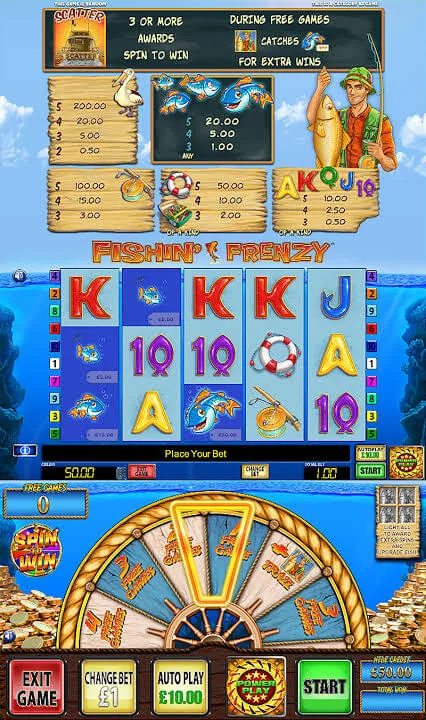
Every spin you place on Fishin' Frenzy is a contract: you agree to the game rules, the operator's terms, and the way your stake is used. Most players never read these documents, then wonder why a win didn't pay out the way they expected or why a withdrawal takes three days. This page walks through what you're actually agreeing to when you click Spin, where the money goes, what the operator can and cannot do, and how to protect yourself if something goes sideways.
The short version: Fishin' Frenzy is a slot machine with transparent maths — the RTP is published, the volatility is measurable, and the outcome of every spin is determined by a certified random number generator. But the game sits inside an operator's platform, and that platform has its own rules about deposits, withdrawals, bonuses, and fair use. If you don't understand both layers, you're gambling blind.
What you agree to when you place a stake
The moment you load Fishin' Frenzy and set a stake, you enter a binding agreement with the operator. That agreement covers the game rules — published by Blueprint Gaming — and the operator's own terms of service. The game rules define how the reels work, how wins are calculated, and what happens during the free-spins feature. The operator's terms define how your account works, how you deposit and withdraw, and what happens if there's a dispute.
Here's what you're agreeing to on the game side: your stake buys one spin. The outcome is determined by a random number generator the instant you press Spin. The RTP — return to player — is set by the operator and disclosed in the game's paytable, typically between 96.12% and 96.96%. That percentage is calculated over millions of spins, not your session. On a high-volatility variant like Fishin' Frenzy Megaways, you can lose twenty spins in a row and still be within normal distribution. The game does not owe you a win.
On the operator side, you're agreeing to their payment terms, their bonus terms if you've accepted an offer, and their right to verify your identity before they release funds. If you deposit £50, trigger free spins, and win £200, that £200 is subject to the operator's withdrawal process: document checks, 24–48 hours for approval, then 1–3 working days for the transfer to your bank. The operator can also cap your stake at £2.00 if you're aged 18–24, or freeze your account if an affordability check flags spending that looks problematic relative to your income.
- The game's RTP applies over the long run, not per session — short-term variance is normal.
- Malfunction voids all pays: if the game crashes mid-spin, the operator refunds your stake but you lose any potential win.
- Bonus terms override game rules: if your £200 win came from bonus spins, you'll face a wager requirement before you can withdraw.
- The operator can close your account for suspected fraud, bonus abuse, or a failed affordability check, and they'll return your deposited balance minus any bonus funds.
Where your stake goes and how RTP actually works
When you stake £1.00 on Fishin' Frenzy, that pound doesn't sit in a pot waiting for you to win it back. The operator takes a cut immediately: 40% goes to HM Revenue & Customs as Remote Gaming Duty, effective April 2026. The rest covers the operator's costs — platform fees, payment processing, Blueprint's licence fee, marketing, and profit. What's left funds the RTP pool, which pays out over time to all players collectively, not to you individually.
The RTP — say, 96.50% — means that for every £100 wagered across all sessions, the game is programmed to return £96.50 in wins. That's a statistical average over millions of spins. In your session, you might see 80% or 110% or 40%. The random number generator doesn't track your personal RTP; it generates outcomes independently each spin. High volatility means wins are infrequent but larger when they hit, so your balance can swing wildly even when the long-term maths is fair.
If you're chasing losses because you've dropped below the published RTP in your session, stop. The game doesn't owe you a correction. The RTP is a design parameter, not a guarantee. The only number that matters in the short term is your bankroll, and the only control you have is when to stop.
Withdrawals, verification, and when the operator can delay payment
You win £500 on Fishin' Frenzy, request a withdrawal, and then wait. The first withdrawal from any UKGC-licensed operator triggers a document check: proof of identity, proof of address, sometimes proof of payment method. This isn't optional — the operator is legally required to verify you before releasing funds. The process takes 24–48 hours if you upload clear documents; longer if you don't. Once approved, the transfer itself depends on the method: e-wallets clear in hours, Faster Payments to your bank take same-day to two working days, debit-card refunds take one to three working days.
The operator can delay or refuse a withdrawal in specific situations: you've breached the terms of service, you're using a payment method that isn't in your name, you've triggered an affordability check and haven't provided the requested documents, or the win came from a bonus and you haven't cleared the wager requirement. They can also cap withdrawals — some operators limit you to £5,000 per month even if you win more — and they can ask for a source-of-funds declaration if your deposits spike suddenly.
- First withdrawal: upload ID and proof of address before you request it, so there's no delay.
- Check the operator's withdrawal limits in their terms — some cap daily or monthly totals.
- If you've taken a bonus, check the wager requirement and max-win cap before you play; some bonuses cap your winnings at £100 even if you hit the free-spins jackpot.
- If an affordability check is triggered, respond quickly with bank statements or payslips; ignoring it freezes your account.
What happens when the game malfunctions or a dispute arises
Game malfunctions are rare but not impossible. The most common scenario: the game freezes mid-spin, your browser crashes, or the connection drops before the result displays. Blueprint's software logs every spin server-side, so when you reload, the result is already determined. If you won, the funds will be in your balance. If the spin was voided due to a technical fault, the operator refunds your stake. What you don't get is the win you might have hit — malfunction voids all pays, and that's in the game rules you agreed to.
If you believe a win wasn't credited correctly, contact the operator's support team first. They can pull the server logs and show you the exact outcome of the disputed spin, including reel positions, paylines triggered, and the amount credited. If you're still unsatisfied, you can escalate to the operator's internal complaints process. UKGC licensees are required to have one, and they must respond within eight weeks. If that doesn't resolve it, you can refer the case to an independent alternative dispute resolution service — most operators use IBAS or eCOGRA — at no cost to you.
The operator cannot change a game outcome after the fact, even if you claim the RNG was unfair. The RNG is tested and certified by independent labs like eCOGRA or iTech Labs, and every spin is logged. What the operator can do is investigate whether their software delivered the result correctly. If there's a proven fault — say, the game displayed a win but didn't credit it — they'll pay you. If the RNG simply produced a losing streak, that's not a fault; that's variance.
| Scenario | What happens | Your recourse |
|---|---|---|
| Game freezes mid-spin | Reload; outcome already determined server-side | If win is missing, contact support with timestamp |
| Win not credited | Check transaction history; server logs show exact result | Raise a complaint; operator must respond in 8 weeks |
| Bonus dispute | Operator explains wager requirement or max-win cap | If terms were unclear, escalate to ADR |
| Withdrawal blocked | Usually due to failed verification or affordability check | Provide requested documents; if refused unfairly, escalate |
Bonus terms and why they override everything else
If you accept a welcome bonus — say, 100% up to £100 — you're playing under the bonus terms, not the standard game rules. Those terms typically include a wager requirement, a max-bet limit while the bonus is active, a list of excluded games, and a cap on how much you can win from bonus funds. For Fishin' Frenzy, that means even if you hit the 10,000× max win during bonus play, your cashable amount might be capped at £100 or £500, depending on the operator.
Wager requirements work like this: you deposit £50, get a £50 bonus, and face a 35× wager requirement. You must stake £3,500 — (£50 + £50) × 35 — before you can withdraw any winnings. Spins on Fishin' Frenzy count 100% toward that requirement, but if you switch to a table game, only 10% of each bet might count. If you request a withdrawal before clearing the requirement, you forfeit the bonus and any winnings derived from it. The operator's system tracks this automatically; you can usually see your progress in your account dashboard.
- Max-bet rule: most bonuses cap your stake at £5.00 or lower while the bonus is active; breaking this voids the bonus.
- Game weighting: slots contribute 100%, but some high-RTP games are excluded; check the list before you play.
- Win cap: bonus winnings are often capped at 10× the bonus amount, so a £50 bonus might cap your cashable win at £500.
- Time limit: you usually have 30 days to clear the wager; after that, the bonus and any associated wins are removed.
The safest approach: decline the bonus unless you've read the terms and you're comfortable with the wager requirement. Playing with your own deposited funds means you're subject only to the game rules and the operator's standard terms, with no bet caps and no win limits. If you do take a bonus, treat it as a constrained experiment, not a shortcut to profit.
Stake limits, affordability checks, and when the operator steps in
UKGC rules cap your stake at £5.00 per spin on all online slots. If you're aged 18–24, that cap drops to £2.00. The operator enforces this automatically; you can't override it. These limits exist to slow the rate at which you can lose money, particularly on high-volatility games like Fishin' Frenzy where a bad streak can drain a bankroll in minutes. If you're staking £5.00 per spin and losing ten in a row, that's £50 gone in under two minutes.
Affordability checks start at £150 in net deposits per month. Net means deposits minus withdrawals, so if you deposit £200 and withdraw £100, your net is £100 and you're under the threshold. Once you cross £150, the operator can ask for proof of income — payslips or bank statements — using credit-reference data at the first stage. If you ignore the request, your account is suspended until you provide the documents. If your deposits look disproportionate to your income, the operator can impose a deposit cap or close your account entirely.
If you're losing more than you can afford, the operator's interventions are backstops, not solutions. The real control is yours: set a deposit limit in your account settings, use a reality check to pause play every 30 minutes, or register with GAMSTOP to block yourself from all licensed sites. The operator can see your behaviour — session length, stake patterns, deposit frequency — and they're required to step in if you show signs of harm. That intervention might feel intrusive, but it's preferable to losing money you need for rent.
How to read the terms and protect yourself before you play
The operator's terms of service are a legal contract, usually 10–15 pages of dense text buried in the footer. Most players never read them, then complain when a withdrawal is delayed or a bonus is forfeited. If you're going to stake real money, read at least these sections: account verification requirements, withdrawal processing times and limits, bonus terms and wager requirements, responsible gambling tools, and dispute resolution process. Screenshot the relevant paragraphs so you have a record if something goes wrong.
Before you deposit, check the operator's UKGC licence number in the footer and look it up in the UKGC public register. Make sure the licence is active and covers remote gambling. If the site operates without a UK licence, it's illegal to advertise here, and you'll have no recourse if they refuse to pay out. Unlicensed sites also don't enforce stake caps, don't connect to GAMSTOP, and don't perform affordability checks, which makes them dangerous if you're prone to chasing losses.
- Read the withdrawal section: look for processing times, minimum/maximum limits, and document requirements.
- Check the bonus terms if you're taking an offer: wager requirement, max-bet rule, game exclusions, win cap.
- Look for the responsible gambling section: deposit limits, reality checks, self-exclusion options, links to BeGambleAware.
- Find the dispute resolution clause: which ADR service does the operator use, and how do you escalate a complaint?
- Screenshot the terms: if the operator changes them mid-dispute, you'll need proof of what you agreed to.
Your winnings are tax-free in the UK; you don't report them to HMRC. The operator pays Remote Gaming Duty — now 40% as of April 2026 — on gross profits, which is why the house edge exists. That's the cost of legal, regulated gambling. If you're playing on an unlicensed site to avoid operator restrictions, you're also avoiding the protections: no UKGC oversight, no ADR, no GAMSTOP, and no guarantee they'll pay out at all.
FAQ
What happens if I close the game mid-spin?
The outcome is determined server-side the instant you press Spin, before the reels finish animating. If you close the browser or lose connection, the result is already logged. When you reload the game, any win will be credited to your balance automatically. If the spin was voided due to a technical fault on the operator's side, your stake is refunded. You don't lose the spin by closing early, but you also can't influence the result by refreshing or reconnecting.
Can the operator change the RTP or game settings without telling me?
Blueprint Gaming offers Fishin' Frenzy with multiple RTP configurations — typically 96.12%, 96.00%, 94.00%, or 92.00% — and the operator chooses which version to host. That choice is disclosed in the game's paytable, accessible via the information button. The operator cannot change the RTP mid-session or hide it from you. If you suspect the RTP has been altered, compare the paytable to Blueprint's published specs. If they don't match, contact the operator and escalate to the UKGC if they don't respond.
Why does my first withdrawal take longer than later ones?
The first withdrawal triggers identity verification: the operator checks your ID, proof of address, and sometimes proof of payment method. This is a legal requirement under UKGC rules and anti-money-laundering regulations. Once you're verified, subsequent withdrawals are faster because the checks are already complete. Upload clear, legible documents as soon as you open the account to avoid delays later. If verification takes longer than 48 hours, chase the operator's support team; they're required to process it within a reasonable timeframe.
If I hit a big win on a bonus, do I keep all of it?
No. Most bonuses cap the amount you can withdraw from bonus funds, typically 10× the bonus amount. If you receive a £50 bonus, hit a £2,000 win during bonus play, and the terms cap your cashable winnings at £500, you'll only be able to withdraw £500 once you've cleared the wager requirement. The rest is forfeited. This cap is in the bonus terms, not the game rules, and it overrides the game's max-win potential. Always check the win cap before you accept a bonus, and decide whether the restriction is worth the extra funds.