Does the Fishin' Frenzy demo actually let you play without signing up?
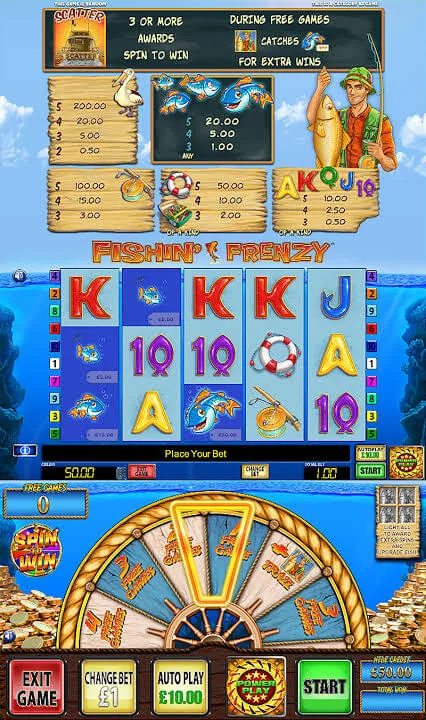
Short answer: it depends where you land. Some game portals let you spin Fishin' Frenzy with virtual credits the moment the page loads — no email, no password, nothing. Walk into a UKGC-licensed casino lobby and the demo button sits behind a registration wall. Not a deposit wall, but you'll hand over your name, date of birth, and probably a document before the reels move.
That's not the site being difficult. Since May 2019, the UK Gambling Commission has required every remote operator to verify a player's age before they access free-to-play versions of gambling products — demo slots included. The rule exists to keep under-18s away from mechanics that look, sound, and feel identical to real-money play. So if you want to test Fishin' Frenzy on a licensed UK casino, expect a quick registration and an identity check up front. What you get in return is a session that mirrors the real game in every way that matters: RNG, paytable, volatility, and the fisherman collecting every fish symbol during free spins.
Where the demo actually runs and what the site asks for
Blueprint Gaming supplies Fishin' Frenzy to hundreds of UKGC-licensed operators, and most of them offer a demo alongside the real-money version. The catch: you register first. The site will ask for your full name, address, date of birth, and a form of ID — passport, driving licence, or a utility bill if the automated check fails. That's the UKGC's age-verification requirement in action, and it applies even when you're playing with pretend money.
Once you're through, the demo launches in your browser. No download, no app install, no deposit. You receive a virtual credit balance — often £100.00 or £1,000.00 in fake currency — and the game behaves exactly as it would with real stakes. Same 5×3 grid, same 10 paylines, same medium volatility. You can set your bet per spin anywhere within the game's range, typically £0.10 to £5.00 on UKGC sites (the £5.00 stake cap applies to everyone aged 25 and over; players aged 18 to 24 hit a £2.00 limit). Scatter three boats, trigger 10 free spins, watch the fisherman wild land and collect every fish value on screen. The maths model is identical.
Some third-party game aggregators and review portals host the demo without registration. These sit outside the UKGC's direct jurisdiction — they're not taking bets, so the age-check rule doesn't bite in quite the same way. You load the page, click play, and you're in. No documents, no timer, unlimited spins. Useful if you want a quick look at the bonus mechanic before you commit to signing up anywhere. Just understand that the moment you move to a licensed operator for real money, the age check comes back.
What a demo session looks like: pace, bet range, and the fisherman mechanic
You open the game, adjust your stake using the coin-value controls, and spin. The reels move at the same speed as real play — no artificial acceleration, no slowed-down animations to stretch out the session. Fishin' Frenzy runs at medium volatility, which means you'll see a mix of small wins, dry spells, and the occasional larger hit when the free spins land. In demo mode, those patterns feel identical because the random number generator doesn't distinguish between virtual credits and actual cash. The game draws from the same outcome pool either way.
The fisherman only appears during the free spins round. Land three boat scatters on reels 1, 3, and 5, and you're awarded 10 free games. Now the fisherman wild can land on any reel, and when he does, he collects every fish symbol visible at that moment and adds their values to your balance. Fish symbols carry prizes ranging from 2× to 50× your bet per line, and if you're lucky enough to see multiple fishermen across several spins, the totals stack quickly. That's where the 5,000× top win lives — not in the base game, but in a free spins round where you hit several fishermen and a screen full of high-value fish.
In demo play, you can trigger the feature as many times as your virtual balance allows, and you'll see the full range of outcomes: rounds where the fisherman lands once and collects £5.00 worth of fish, and rounds where he shows up four times and pays £200.00. Medium volatility doesn't mean every session ends in profit. You can burn through £100.00 of demo credits without hitting free spins once, or you can trigger the feature twice in 30 spins and walk away up. The game makes no promises either way.
Which numbers carry over to real money and which don't
The mathematics are identical: 96.12% RTP, medium volatility, the same hit frequency for the boat scatter, the same distribution of fish values during free spins. If you spend an hour in demo mode and notice that the free spins feature triggers roughly once every 100 to 150 spins, that ratio holds when you switch to real stakes. If you observe that the fisherman tends to land on one or two spins per feature, rather than across all ten, that's the volatility profile talking — and it doesn't change when you deposit.
What doesn't carry over: your balance, your win history, and any sense that the game «owes» you a feature. The RNG resets every time you close and reopen the slot, whether in demo or real play. A cold streak in free mode tells you nothing about what the next real-money session will bring. Conversely, if you hit the feature three times in 50 demo spins and won £400.00 in virtual credits, the game will not suddenly turn tight the moment you deposit. Each spin is independent. The long-term RTP of 96.12% is a statistical average across millions of rounds; your personal sample size — even across hundreds of spins — is too small to converge on that number.
One detail that changes: bet limits. In demo mode, you might see a maximum bet of £100.00 or more listed in the game's paytable. Switch to a UKGC-licensed site with real money, and the controls cap you at £5.00 per spin if you're 25 or older, or £2.00 if you're between 18 and 24. Those are regulatory limits introduced to reduce harm, and they apply to every online slot in the UK. The game's internal maths still supports higher stakes — casinos in other markets can offer them — but here, the software enforces the cap before you spin.
What the demo hides: withdrawal times, KYC delays, and bonus wagering
Demo play shows you the game. It does not show you the operator's withdrawal process, and that's where the experience diverges sharply from the frictionless impression a free session creates. When you win with real money and request a withdrawal, the site must verify your identity — again — before releasing funds. This is Know Your Customer (KYC) compliance, and it's a legal requirement for every UKGC-licensed operator. Even if you passed the age check at registration, the first withdrawal triggers a document review: proof of ID, proof of address, sometimes a bank statement or a selfie holding your passport.
The review takes 24 to 48 hours on most sites, occasionally longer if the automated system flags a mismatch and a human has to step in. During that window, your balance sits in your account, unplayable if you've requested a withdrawal but not yet processed. Once you're verified, the clock starts on the payment itself: e-wallets like PayPal clear within a few hours to a day, Faster Payments to your UK bank typically arrive within two working days, and debit card withdrawals can stretch to three days. None of that friction appears in demo mode, where winnings are instant because they're imaginary.
Bonus wagering is another layer the demo skips entirely. If you claim a welcome offer — say, 50 free spins on Fishin' Frenzy or a £50.00 deposit match — those funds come with a wagering requirement, often 35× to 40× the bonus amount. Win £20.00 from the free spins, and you'll need to wager £700.00 to £800.00 before you can withdraw a penny of it. The free spins themselves might carry a maximum win cap, often £100.00, and there's usually a time limit — seven days to clear the wagering or the bonus and any winnings vanish. Demo mode gives you unlimited credits and no conditions. Real play gives you a bonus structure that looks generous until you read the terms and realise the work involved.
Demo play on a phone: does it behave the same way?
Fishin' Frenzy was built in HTML5, so the demo runs in any modern mobile browser — Safari on iOS, Chrome on Android — without an app install. You load the game page, tap the demo button (after registration if you're on a UKGC site), and the interface scales to fit your screen. The reels, the paytable button, the stake controls, and the spin button all resize and reposition themselves. The core mechanic — fisherman collecting fish during free spins — plays identically. No feature is hidden or removed on mobile.
The experience does compress. On a 6-inch screen, the bet-adjustment controls shrink, and if you have large fingers, you might tap the wrong button once or twice before you find the rhythm. The animation speed doesn't change, but the smaller viewport makes the action feel slightly more cramped. Some players prefer this; it keeps the focus tight and removes distractions. Others miss the breathing room of a desktop monitor, especially during the free spins round when multiple fish symbols land and the fisherman's collection animation plays out across several seconds.
The age-check requirement applies just as firmly on mobile. If you're playing the demo through a UKGC-licensed casino app or mobile site, you'll verify your age before the game loads. Third-party demo hosts that run outside the licensing regime may let you play instantly, but again, the moment you switch to real money, registration and ID checks come into force. Mobile doesn't change the regulatory landscape; it just moves the same process onto a smaller screen.
Affordability checks and stake caps: what kicks in when you switch to real money
From the instant you deposit, the UKGC's affordability framework starts monitoring your activity. Operators now apply the first stage of checks at £150.00 net deposits per month — that's deposits minus withdrawals. Cross that threshold, and the site pulls soft credit-reference data: your name, address, age, and whether you appear on insolvency or county court judgment registers. If the data suggests you might be spending beyond your means, the operator can limit your deposits or ask for proof of income. There's no warning in demo mode because demo mode involves no money. The checks only trigger once your real balance moves.
Stake caps apply per spin, not per session. If you're 25 or older, you cannot bet more than £5.00 on a single spin of Fishin' Frenzy, no matter how much you've deposited or how much you've won. If you're between 18 and 24, the cap drops to £2.00. The game's software enforces this automatically; the stake slider won't move beyond the limit, and if you somehow tried to override it, the transaction would fail. These caps were introduced to slow the speed at which players can lose money on high-volatility slots. Fishin' Frenzy is medium volatility, but the cap applies universally across every online slot in the UK, regardless of the game's risk profile.
Credit cards have been banned for online gambling since April 2020. You can deposit with a UK debit card, PayPal, Apple Pay, Trustly (Open Banking), or paysafecard, but every payment method must be registered in your own name. The operator cross-checks this during KYC. If the payment details don't match your verified identity, the withdrawal request gets blocked until you supply a method that does. In demo play, you never touch a payment screen. In real play, you'll hit it before your first deposit and again before your first withdrawal.
The lowest-risk way to move from demo to real money
Start with £10.00 and bet £0.10 per spin. That gives you 100 spins before you're out, which is enough to see whether the feature triggers at the frequency you observed in demo mode and whether the win amounts feel consistent. Medium volatility suggests you'll hit the free spins once or twice in that span, but there's no guarantee. If you hit the feature early and end the session up £15.00 or £20.00, withdraw immediately. Test the operator's verification process and payment speed on a small win before you deposit anything larger.
Choose a site you can verify in the UKGC's public register. Every licensed operator must display its licence number in the footer of its website. Copy that number, search the Commission's register, and confirm the name, licence type (it should say «remote gambling software licence» or similar), and status (active, not suspended or revoked). If the details match, you're dealing with a legitimate operator. If the footer shows no licence number, or the number doesn't appear in the register, walk away. Unlicensed sites are illegal to operate in the UK, and if something goes wrong — withheld winnings, ignored complaints — you have no regulatory recourse.
Set a deposit limit before you play your first spin. Every UKGC site must offer daily, weekly, and monthly deposit caps, and you can set one during registration or immediately afterward in your account settings. Pick an amount you can afford to lose — not an amount you hope to win back — and lock it in. The limit applies across all future deposits until you manually change it, and any request to increase the limit comes with a 24-hour cooling-off period. This is the single most effective harm-reduction tool the regulation provides, and it costs you nothing to use. Demo mode gives you unlimited credits because the stakes are fake. Real money requires boundaries, and the deposit limit is where you draw that line.
FAQ
Do I need to register to play the Fishin' Frenzy demo on a UK casino site?
Yes, on UKGC-licensed sites. The Commission has required age verification for free-to-play gambling products since May 2019, so you'll register, provide your date of birth, and pass an ID check before the demo loads. You won't deposit anything, but the operator must confirm you're 18 or over. Some third-party game portals host the demo without registration, but the moment you switch to a licensed operator for real money, the age check returns.
Does the demo use the same RTP and volatility as real-money play?
Yes. The demo runs Blueprint Gaming's standard Fishin' Frenzy build: 96.12% RTP, medium volatility, and the same fisherman-collection mechanic during free spins. The random number generator doesn't distinguish between virtual credits and real stakes, so the hit frequency and win distribution you observe in demo mode reflect what you'll encounter with actual money. Your personal results will vary — medium volatility guarantees nothing over 50 or 100 spins — but the underlying maths model is identical.
Can I play the demo on my phone, and will the £5.00 stake cap apply?
The demo runs in any mobile browser without an app install, and the interface scales to fit your screen. The £5.00 and £2.00 stake caps only apply to real-money play on UKGC-licensed sites — they're regulatory limits, not game limits. In demo mode, you might see higher maximum bets listed in the paytable (£10.00, £100.00, or more), but those figures become irrelevant the moment you deposit and the software enforces the UK cap.